#125 · AI-Powered Exploit Validation and Remediation Guidelines
We’re excited to introduce a significant enhancement to help you validate discovered vulnerabilities and remediate them.
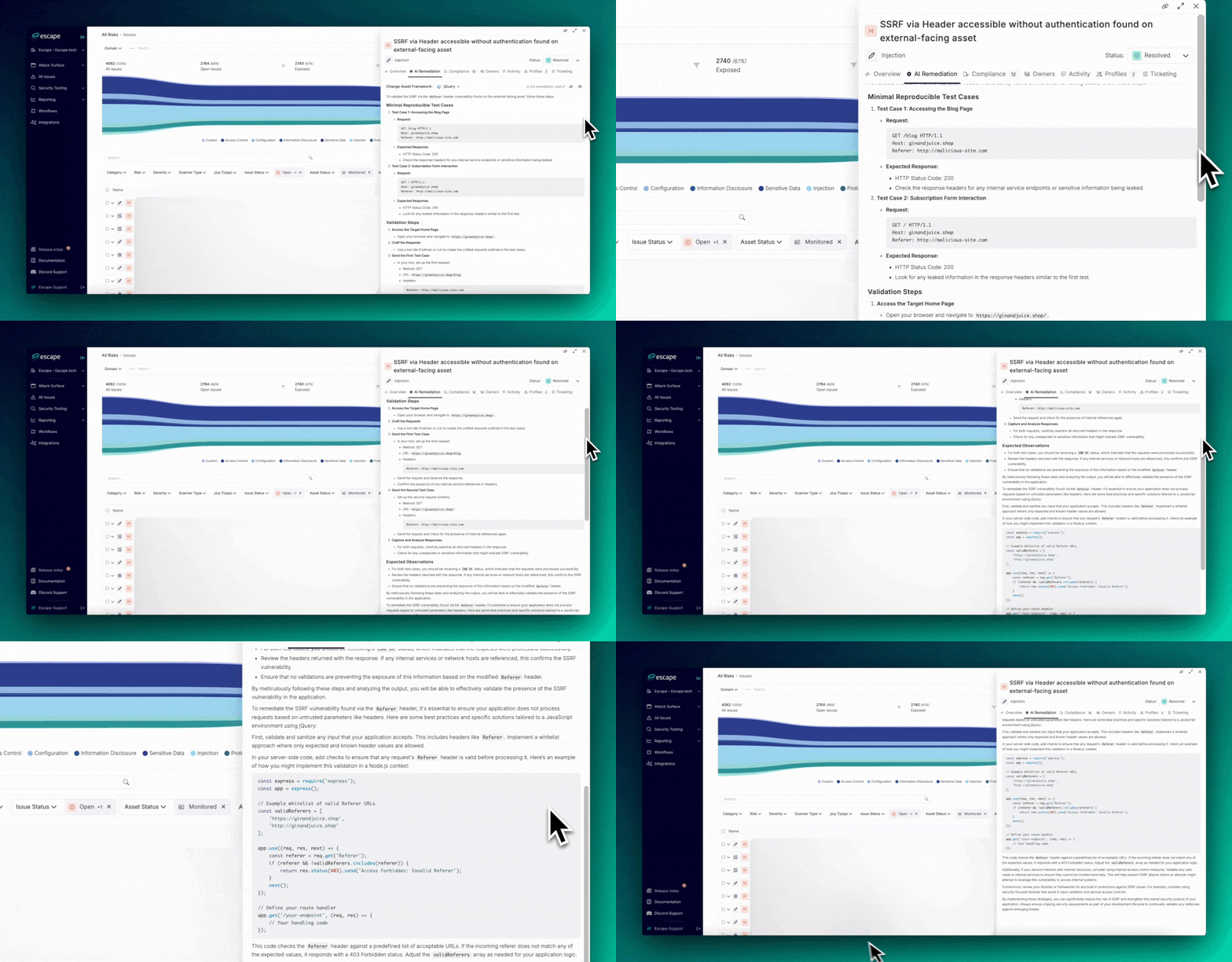
With our AI-powered proof of exploit and remediation guidelines, we’ve evolved from static code snippets tailored to specific frameworks to dynamic, context-aware solutions generated by a specially trained Large Language Model (LLM).
This update puts intelligent remediation and validation front and center, giving teams precise, actionable guidance with proof that the vulnerability can be exploited.
What’s Included:
- Minimal Reproducible Test Cases: Clear, concise test cases to validate the vulnerability and remediation.
- Validation Steps: Step-by-step guidance to ensure remediation is correctly implemented.
- Expected Observations: Key things to expect after remediation to confirm effectiveness.
- Actionable Remediation Instructions: Contextual, tailored fixes that go beyond generic advice.
Key Benefit:
By leveraging AI, we generate remediation actions tailored to your environment and the specific vulnerability, backed by proof of exploit. This significantly reduces guesswork and ensures that the provided fixes are both effective and applicable. You can apply these solutions with confidence, knowing that the vulnerability has been thoroughly validated and addressed.
For instance, when addressing an SSRF vulnerability triggered by the Referer header in a JavaScript (jQuery) environment, the new guidelines show how this vulnerability can be exploited and will:
- Help you whitelist valid Referer headers
- Guide you in server-side validation to reject invalid requests
- Ensure internal access control to limit exposure to unauthorized service calls
Why This Matters:
These updates streamline remediation and validation, ensuring accuracy, efficiency, and confidence in your security fixes. Teams can spend less time guessing and more time building, while knowing vulnerabilities are effectively mitigated.
Try it out for yourself!